
✻ Founders · Jul 3, 2026
The AI-native stack in 2026: what's settled, what's still a gamble
By Rocío Bachmaier, CEO & Founder · 6 min read
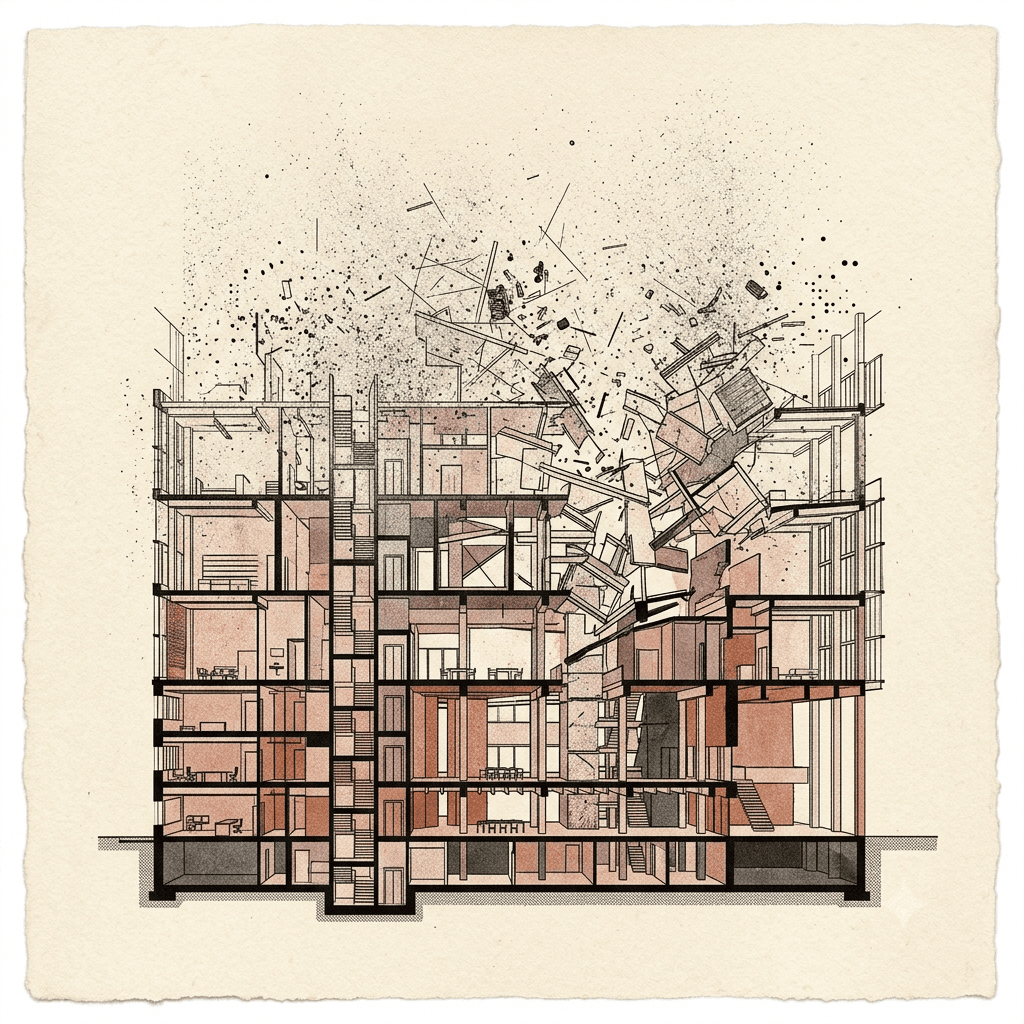
Two years into the agent era, the AI stack has split into two distinct zones: a foundation that's solid enough to build on, and an upper layer that's still shifting fast enough to punish premature commitment. Founders who can't read the difference are either moving too slowly on the settled parts or locking in too early on the unstable ones.
Here's where we'd draw the line right now.
What's settled
Foundation models as a commodity layer
The model itself is no longer a differentiator for most applications. GPT-4-class capability is table stakes. What matters is what you build on top: your data, your workflow integration, your fine-tuning. Founders still pitching "we use the best model" as a competitive advantage are pitching to the wrong room.
RAG as a standard pattern
Retrieval-augmented generation is no longer experimental. It's the default architecture for any product that needs to work with proprietary or up-to-date information. The tooling, vector databases, embedding pipelines, chunking strategies, has matured enough that building it is a solved problem. The interesting work is now in relevance tuning and evaluation.
Structured outputs and tool use
Getting reliable structured output from models, JSON, function calls, typed responses, is now reliable enough to build production systems on. The days of prompt-hacking your way to consistent formatting are largely over. This unlocks a whole class of automation that was too brittle twelve months ago.
What's still a gamble
Multi-agent orchestration frameworks
LangChain, LlamaIndex, AutoGen, CrewAI: the agent framework space is still volatile. Several frameworks that looked like emerging standards in 2024 have seen major API breaks, stalled development, or been leapfrogged by newer entrants. If you're building on top of a framework rather than closer to the model API, make sure you have an exit path.
Long-context as a substitute for RAG
Models with 1M+ context windows are tempting as a simpler alternative to RAG pipelines. In some cases they work well. In others, especially where precision matters or costs need to scale, they introduce new problems. The jury is still out on when long context beats RAG and vice versa. Don't commit your architecture to one answer yet.
Voice and multimodal interfaces
Real-time voice AI has improved dramatically, but latency, reliability, and cost at scale are still rough edges. Multimodal pipelines that combine vision, audio, and text are powerful in demos and fragile in production. Build here if it's core to your product, but budget for the debugging time.
The builder's heuristic
A useful rule of thumb: if a pattern has two or more production-grade implementations from different teams, it's settled enough to build on. If it only exists as a tutorial, a research paper, or a single vendor's offering, treat it as a gamble and size your bet accordingly.
The founders who will come out ahead in the next eighteen months are the ones who move fast on the settled layer and stay flexible on everything above it.